Wednesday, November 24, 2021

The First Thanksgiving - November 24, 2021

My An Arkie's Faith column from the November 24, 2021, issue of The Polk County Pulse.
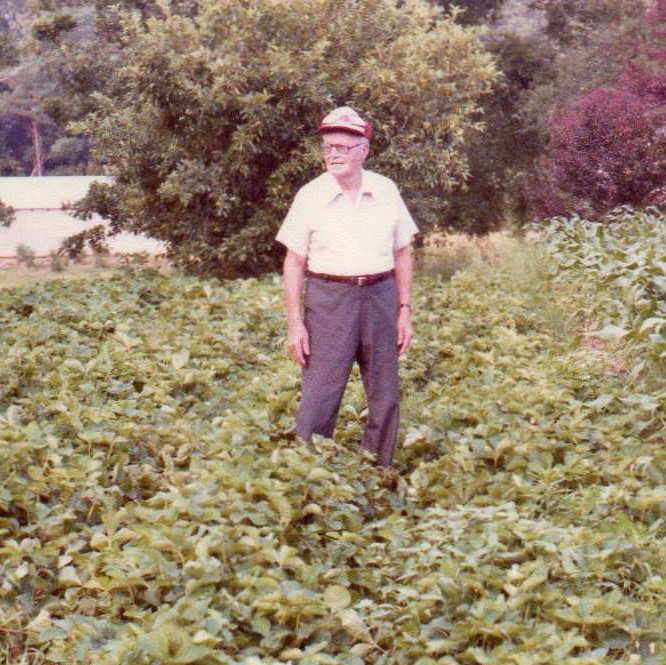

Golden threads of morning light announce a new day. It is our first Thanksgiving Day in Arkansas. The weather is unusually warm for November, and I am thankful for it. My wife and I are hosting Thanksgiving this year, and there will be more than twenty people here. There isn’t room for that many in our small house, so we have cleaned the garage and mopped the floor several times. We have set up borrowed tables and folding chairs in the garage. Cooking is already underway in the kitchen. I’m thankful for the warm weather because our garage isn’t heated.

There is a bustle of activity as everyone arrives. I’m thankful to be surrounded by family and friends. My parents and both sets of grandparents are here. After a bountiful meal, my Grandpa Lawry asks if he can sing a song. He loves to sing, and even though he doesn’t have a good singing voice, some of my favorite memories are of him singing. Grandpa chooses the song, The Love of God. His voice wavers and his words slur a bit as he sings acapella, “The love of God is greater far than tongue or pen can ever tell. It goes beyond the highest star and reaches to the lowest hell.”

His voice is filled with emotion, and I do not doubt that he believes every word with his whole heart. He continues singing, “Could we with ink the ocean fill and were the skies of parchment made. Were every stalk on earth a quill and every man a scribe by trade. To write the love of God above would drain the ocean dry. Nor could the scroll contain the whole though stretched from sky to sky.” As the last words of the song rolled off his lips, I felt warm and cozy, surrounded by the love of God and family.

At the time, I didn’t realize how special that Thanksgiving would become in my memory. But in just a couple of weeks, my Grandpa passed away suddenly. I’m thankful for that first Thanksgiving in Arkansas and the memory of Grandpa singing. Even though it was forty years ago, my memories are vivid, and I can still hear him sing. 

I remember learning in school that the Pilgrims held the first Thanksgiving in 1621. But since my boyhood school days, I have discovered that there were Thanksgiving celebrations held in America before the 1620s. The people of El Paso, Texas, claim that the first Thanksgiving was held in Texas in 1598. Spanish conquistador Don Juan de Oñate led an expedition north of the Rio Grande into an area now known as Texas, where he and his colonists joined Native Americans in a feast on April 30, 1598.

The King of Spain sent Oñate to colonize the area north of the Rio Grande. His journey started from Santa Barbara, Chihuahua. The 50-day trip across the Chihuahua Desert, was unforgiving to the expedition. There were 400 men, 83 wagons, and thousands of horses, sheep, and goats. Their provisions ran out quickly, and the desert provided no running water or rainfall. After days without water, the party finally spotted the banks of the Rio Grande. Capt. Villagrá, who provided a written record of the expedition, wrote, “Our men threw themselves into the water and drank as though the entire river did not carry enough to quench their terrible thirst. Then satisfied, they threw themselves upon the cool sands, deformed and swollen and more like toads than men.” They rested under the cottonwood trees on the banks of the Rio Grande for ten days, spending their time swimming, fishing, and hunting.

On April 30, 1598, Oñate requested that the friars traveling with them say a Mass of Thanksgiving to celebrate their deliverance from death in the desert. “We built a great bonfire and roasted the meat and fish, and then all sat down to a repast the like of which we had never enjoyed before,” Villagrá wrote. “We were happy that our trials were over, as happy as were the passengers in the Ark when they saw the dove returning with the olive branch in his beak, bringing tidings that the deluge had subsided.”

Although the people of El Paso have an excellent historical claim to the first Thanksgiving in America, the people of St. Augustine, Florida, believe that they have a better one. On September 8, 1565, hundreds of Spanish settlers, under Pedro Menéndez de Avilés, landed at what is now St. Augustine, Florida. Blaring trumpets and thundering artillery accompanied Avilés as he waded ashore. The Spanish admiral kissed Father Francisco Lopez’s cross, then claimed Florida for God and Spain. As curious members of the indigenous Timucua tribe looked on, the newly arrived colonists gathered around a makeshift altar as Father Lopez performed a Catholic Mass of Thanksgiving for their safe arrival. At the invitation of the Spanish, the Timucuans then joined the newcomers in a communal meal.

Florida historian Michael Gannon feels that this feast was America’s first Thanksgiving. In his book “The Cross in the Sand,” he wrote, “It was the first community act of religion and thanksgiving in the first permanent settlement in the land.” But Texas holds an even earlier claim to the first Thanksgiving. An official Texas Historical Commission marker near the Palo Duro Canyon acknowledges that Fray Juan De Padillo conducted thanksgiving services there on May 29, 1541, for the army accompanying Spanish conquistador Francisco Vasquez de Coronado.

Gentle Reader, the location of the first Thanksgiving in America is not what is essential. God wants us all to live as though each day was Thanksgiving. But too often, we forget to give thanks for what God is doing for us. We have a choice, every day, to give him thanks. And with a heart of thanksgiving, we realize that no matter what we face, God doesn’t just work to change our situations and help us through our problems. He does more. He changes our hearts. Paul wrote, “in every situation be thankful and continually give thanks to God; for this is the will of God for you in Christ Jesus.” 1 Thessalonians 5:18 (AMP) “Clothe yourself in love. Love is what holds you all together in perfect unity. Let the peace that Christ gives control your thinking, because you were all called together in one body to have peace. Always be thankful.” Colossians 3:14,15 (NCV) Look for things to thank God for every day. Happy Thanksgiving!


Wednesday, November 17, 2021

Perception of Time - November 17, 2021

My An Arkie's Faith column from the November 17, 2021, issue of The Polk County Pulse.

The air has the crisp feel of fall, and the stars are bright overhead as I load windshields into the back of my little S-10 shop truck. I have a full load this morning, with every slot in my rack filled. When I have loaded everything into my truck, I drive to the gas station to fill up and then head back to Mena.

I have been making two or three trips a week to DeQueen to pick up my auto glass for the past several months. My supplier no longer delivers to the Mena area but does deliver to DeQueen. During the night, they drop off my order at a storage unit that I have rented. On the days I make the trip to pick up my glass, I leave early in the morning to be back at my shop in time to open before 8:00 A.M. 

Today as I leave DeQueen, it is already twilight. Even though the sun isn’t up yet, its light filters through the atmosphere and gently illuminates the landscape. As I drive, a rosy hue begins to creep across the morning sky. Golden fingers of sunlight begin to appear. As I round a corner, there is a large open pasture to the east. Suddenly the sky is ablaze with the fire of the rising sun, casting long shadows on the ground. Soon the sun peaks out from behind the tree line. I see the first rays of the sun fall on the earth. Before my eyes, the clouds become lit with a fabulous, colorful light as the rising sun announces the coming of a new day. I pull over to the side of the road and get out to take a photo. 

It is the first sunrise I have seen for a while. My schedule hasn’t changed, but my perception of time has. Daylight Saving Time has ended until next spring, and last Sunday, we turned our clocks backward one hour. The intriguing thing about Daylight Saving Time is that we aren’t changing time. It is simply our perception of time. We aren’t changing how long the sun remains in the sky, and we aren’t changing the 24 hours in a day. We’re simply changing what answer the clock gives us.

The new time on my clock means that I witnessed the sunrise on my morning drive back from DeQueen instead of driving back in the dark. With the time change comes a new perception of my surroundings. I can see everything clearly as I go through the countryside. With the sunrise, the leaves of the trees glow in the warm morning light. The branches of each tree spread out with glorious fall colors. I had made this drive just a few days ago and had seen nothing. But today, the beauty of the sunrise and the magnificent fall colors speaks to my soul. “The God of gods, the mighty Lord himself, has spoken! He shouts out over all the people of the earth in every brilliant sunrise and every beautiful sunset, saying, ‘Listen to me!’” Psalms 50:1 (TPT)

I am happy to be driving in the warmth of the morning light and am enjoying the beauty of the landscape around me, but in the back of my mind comes the nagging realization that tonight when I leave work, it will already be dark. As much as I enjoyed this morning, I am not looking forward to it getting dark so early.

It’s interesting when you think about it. My perception of time changed. Because of a predetermined concept, we all turned our clocks back an hour and began to function in this new time. And our perception changed. We didn’t change any physical thing. “It is the Lord who created the stars, the Pleiades and Orion. He turns darkness into morning and day into night.” Amos 5:8 (NLT) The sun comes up at the same time, but we perceive that time differently. We arrange our schedules around this new perception of time. 

I am often frustrated by my lack of control over my life. It makes me wonder how my life would become more enjoyable if I changed my perception. What if I looked at my situation in a new light? What would happen if I turned back the clock of my perception?

Changing our perception does not mean ignoring the hardships of this life. We all have difficulties. We all spend time driving in the dark. But Jesus says, “I am the light of the world. The one who follows Me will no longer walk in darkness, but will have the light of life.” John 8:12 (TLV) We will still grieve over things lost and fight against injustice. We will still have troubles in our lives. But we can look at these things in a way that does not destroy our emotions or our stability. When we change our perception of this life in terms of God’s love for us, we see our struggles in a new light. This idea takes time to become a reality. Like our bodies adjusting whenever there’s a time change, our minds and spirits need time to grow used to new perceptions. It won’t happen overnight.

You can start changing your perception by remembering that God is in control. We aren’t in charge of the sun or the earth, but God is. He won’t leave you forsaken when you feel things are beyond your reach. Trust in God’s plan when you struggle with desiring a situation to turn out a specific way. Trust in His goodness. You can have the same security as the Psalmist who wrote, “When I felt my feet slipping, you came with your love and kept me steady. And when I was burdened with worries, you comforted me and made me feel secure.” Psalms 94:18,19 (CEV)

Gentle Reader, “I pray that God, the source of hope, will fill you completely with joy and peace because you trust in him. Then you will overflow with confident hope through the power of the Holy Spirit.” Romans 15:13 (NLT) We can have peace and joy trusting God instead of trying to control everything ourselves. We may not have the power to change all things, but we can change our perception of all things. Changing our perception can help us remember that God is in control. He says, “Stop your striving and recognize that I am God. I will be exalted over the nations! I will be exalted over the earth!” Psalms 46:10 (NET)


Wednesday, November 10, 2021

Shine Eye Surprise - November 10, 2021

My An Arkie's Faith column from the November 10, 2021, issue of The Polk County Pulse.

There is a chill in the air as I load the luggage into the back of our SUV. I can see my breath as I scrape away the thin layer of ice that covers the windows. After a busy week, I am looking forward to our trip to the Buffalo River. I'm hoping to relax and see beautiful fall colors. 

For the last several years, we have made plans with my sister each fall to spend a long weekend somewhere in the Ozarks. We try to pick a weekend when the fall colors will be on display. This year I rented a cabin from Buffalo River Outfitters near St. Joe, Arkansas. I love the Buffalo River, but this was our first time to visit this area of the river.

The drive from Mena to the Buffalo River area is always beautiful, and today is no exception. In Danville, we turn onto Highway 27. In Dover, Highway 27 splits off from Highway 7 and heads towards Marshall. I have never been on this section of the road before and find it intriguing. The leaves are beginning to change, and muted colors cover the hillsides with patches of golden splendor and occasional oranges and reds. The road twists and winds its way through the countryside, but I am not in a hurry. I soak in the beauty of the area, and the tension of the week melts away.

Our cozy cabin is just a short distance from the Buffalo River, with easy access to Grinder's Ferry and Tyler's Bend. We spent the weekend exploring from Spring Creek to Dillard's Ferry and Buffalo Point to Rush. The weather was perfect, with crisp cool mornings and warm sunny afternoons. Each new location that we explored impressed us with its beauty.

At night we visited Tyler's Bend to view the night sky. The Buffalo National River is an International Dark Sky Park, the only dark sky park in Arkansas. It was a new moon, the humidity was low, and the skies were cloudless, providing perfect conditions for observing the night sky. From our vantage point at the pavilion, there was no artificial light visible. The sky was ablaze with stars, and the milky way dominated our vision. 

Our time went by much too fast, and soon it was time to check out of our cabin and make our way back home. We planned to eat breakfast at Ferguson's Country Store and Restaurant and then take a short hike to the Collier Homestead at Tyler's Bend before heading home. Our meal at Ferguson's was excellent, and the staff was friendly. As we visited with our waitress and told her the places we had explored over the weekend, she told us about a nearby location that is not well known. 

We decided that we had time to explore one more place before leaving the area, so we found the place our waitress had told us about. We took the unmarked gravel road just before the bridge across the Buffalo River. The road was called Shine Eye Road. At the end of the road, there is a small parking area and one picnic table. We headed down the path to the river. As I stepped out of the trees onto the gravel bar, the beauty of the river and the bluffs spread out in front of me. It was one of the most beautiful scenes I had seen all weekend. 

We took our time soaking in the beauty, slowly walking along the large gravel bar as far as we could. A group on horseback came riding by, and we saw several canoes and kayaks floating down the river. The views were breathtaking, and I said a little prayer, thanking God for the recommendation of our waitress and the soul-cleansing beauty of the area. As I walk along the river, I hear one of my favorite songs running through my mind. The lyrics to "Creation Calls" by Brian Doerksen seem perfect for the moment. "Listening to a river run, watering the earth. Fragrance of a rose in bloom. A newborns cry at birth. How could I say there is no God? When all around creation calls."

We took lots of photos, but finally, we had to leave. I know that I will be back to Shine Eye someday when I can spend more time. I am amazed that there is an area of such beauty that so few people have seen. I'm thankful that I was able to see it. As I reflected on the beautiful relaxing weekend and how much of God's incredible creation I had seen, I thought of David's words. "The heavens declare the glory of God, and the skies announce what his hands have made. Day after day, they tell the story; night after night, they tell it again. They have no speech or words; they have no voice to be heard. But their message goes out through all the world; their words go everywhere on earth." Psalms 19:1-4 (NCV)

The surprising beauty of a place like Shine Eye speaks to our hearts. Something about the majesty of river bluffs or admiring beautiful fall colors reminds us we are not accidents but are here by design. God uses his creation to show us His power, His grace, and His love. He uses the beauty of nature to tell us who He is, who we are, and how much He loves us. As you go about your day, look for the beauty in your surroundings. Notice the beauty of the flowers in your garden or the birds as they sing. God's creation is all around us.

Gentle Reader, God has given us his creation to show us His grace and love. How often does God give us a beautiful sunset or paint a rainbow in the sky at just the right time to remind us of His love and promises? The next time you're enjoying the beauty of nature, thank the Lord for all He created.  God knows each star in the night sky and each bird in the air. How much more does He care for you? "Ask the animals what God does. They will teach you. Or ask the birds in the sky. They will tell you. Or speak to the earth. It will teach you. Or let the fish in the ocean educate you. Are there any of these creatures that don't know what the powerful hand of the Lord has done? He holds the life of every creature in his hand. He controls the breath of every human being." Job 12:7-10 (NIRV)


Wednesday, November 3, 2021

Memories of Buffville - November 3, 2021

My An Arkie's Faith column from the November 3, 2021, issue of The Polk County Pulse.

A couple of years ago, I made a trip to southeastern Kansas with my Daddy. He had grown up in the area, and we visited places filled with nostalgia. I had a wonderful time reliving old memories. My cousin, Don, drove us around the countryside, showing us the places where family members had lived. I had a wonderful time reminiscing and hearing family stories.

Memories of the trip came flooding back last week when I received a large manilla envelope in the mail. When I opened it, there were several photocopied pages along with a handwritten note that said, “Richie, I am sending you a copy of this I found in my mom’s things. Thought you might like it.” It was from my cousin Darlene. The photocopies were of my Uncle Lloyd’s letter to my cousin Elsie, dated November 8, 1992. The title, neatly written across the top of the first page, was Memories of Buffville. One of the places Daddy and I visited on our trip to Kansas was the ghost town of Buffville, where he had been born. 

In his letter, Uncle Loyd wrote, “the north shale pit was a thing close to paradise for me when I first came to Buffville in June 1928. It had been abandoned when springs of water made it impossible to take any more shale out of it. All of the boys in Buffville swam in the north pit, and in summer, we would go swimming several times a day. Even after school started, we would go swimming before school in the morning. Since we didn’t have indoor plumbing, it was a very convenient way to take a bath. We boys did a lot of fishing there too; sometimes, we could sell the perch to people for a penny each. The water was so clear we could watch the little fish take hold of the bait and drag them in.”

The history of ghost towns is not always easy to trace. Most ghost towns originally grew up around some business venture. Buffville, Kansas, is not any different. In 1903 the Kansas Buff Brick Company opened their plant just a couple of miles south of Altoona. Buffville’s history starts with an identity crisis. It was first known as Buff City, but in February 1910, the name changed to Buffton. Starting on September 2 of that year,  it was known as Buffington for ten days, then back to Buffton for one day, and finally it was called Buffville from September 13, 1910, until the post office closed on October 31, 1943.

Even though the town’s birth can be pinpointed to either 1903, when the Kansas Buff Brick Company started operation, or 1910 when the Post Office opened, the death of the village was not quite so clear cut. Kansas Buff Brick sold out to the United Brick & Tile Co. in 1929, and the plant closed not long after. The Post Office closed in 1943, and the last students went to school there in 1950. By the 1970s, there was no evidence of the thriving community of Buffville.

In her book, Opal Lawry Vega’s Memories, my Aunt Opal wrote, “Grandma and Grandpa moved to Buffville. Grandpa Reeve went to work at the brickyard. All the people who lived there worked at the brickyard. There was a small store and a rooming house. My father stayed at the rooming house. Mom and Aunt Lola delivered milk to the boarding house, and Daddy began talking to them and then walked home with them and then would sit on the porch and talk. Mom and Daddy were married on September 30, 1927. Daddy had been married before and had a son, Lloyd, about nine years of age. 

We lived in Buffville until the brickyard closed down. I was born there. Daddy did whatever he could find to do, mostly on farms. Of course, it was the depression years, and no one had much. We lived in a farmhouse near Buffville when Delbert was born. Daddy and Grandpa were in Colorado harvesting broom corn at that time.

That house burned down while we were all away. I was barefoot, and my shoes burned up. We lived with Grandpa and Grandma in Buffville for a while. Daddy and Uncle Pete made a living by driving to Joplin, Missouri, to buy fruit and vegetables to sell door to door. We later moved back to Buffville. Grandpa and Grandma still lived there and a few other families and Fred’s Store. We had a cow, and sometimes Daddy would let me ride her when he took her to the shale pit for water. Bob was born there. We called him Bobby Bill as they couldn’t decide what to call him, Bobby or Billy.”

My Daddy’s family was part of the Buffville community for several years. My Grandpa and Great-Grandpa worked at the brickyard. In Uncle Lloyds letter, he wrote about the work. “The south pit was used to supply shale to make brick. My Daddy, Ben Lawry’s job was to load small metal cars with shale and push them on a narrow-gauge track to the bottom of an inclined ramp where a power cable would pull them up to the place they could be dumped. Each car held one half cubic yards of shale, and Daddy got twenty-five cents for each one he loaded. It was hard brutal work. Grandpa Urban Reeve ran the dry pit where the shale was ground to a powder for brickmaking.”

Buffville holds so many memories for my family, but today there is nothing left to identify the community other than the shale pits. Even though there is nothing physical left, the memories live on as long as there is someone to keep them alive. Civil rights activist Rosa Parks wrote, “memories of our lives, of our works and our deeds will continue in others.” 

Gentle Reader, be grateful for the places and people who have been special to you. Cherish your memories and take nothing for granted. Remember that many things, like the community of Buffville, disappear from view. But memories are the only thing that no one can destroy. Lucy Maud Montgomery put it this way, “nothing is ever really lost to us as long as we remember it.” But if we don’t remember, things can be lost. It is vital to exercise our memories. “So be careful, and watch yourselves closely so that you don’t forget the things which you have seen with your own eyes. Don’t let them fade from your memory as long as you live. Teach them to your children and grandchildren.” Deuteronomy 4:9 (GW)


Wednesday, October 27, 2021

A Case of Nerves - October 27, 2021

My An Arkie's Faith column from the October 27, 2021, issue of The Polk County Pulse.


The leaves on the trees along Highway 270 are glowing in the early morning sunlight, displaying muted colors of orange and gold. Autumn has begun painting the landscape with a slow grace, giving me a preview of the vibrant yellows, orange, and scarlets that will soon blanket the hillsides. I take some notice of the beauty surrounding me, but my mind is preoccupied. I am on my way to Hot Springs for a doctor’s appointment. 

For the past year, I have been suffering from leg pain. My orthopedic surgeon scheduled a nerve conduction study to try and find the cause of my symptoms, numbness, tingling, and pain. I am not looking forward to the procedure. A nerve conduction study measures how fast an electrical impulse moves through your nerves and can help identify nerve damage.

I researched the procedure on the internet and found that the doctor would stimulate my nerves with electrode patches attached to my skin during the test. He would do this by placing two electrodes on the skin over my nerve. One electrode would stimulate my nerve with an electrical impulse, and then the other electrode would record it. He would repeat this procedure for each nerve he tested. The doctor’s office told me that the study would take more than two hours. A friend of mine had experienced the procedure, and his description was not easing my mind. I am not fond of medical procedures, and everything about this one was outside of my comfort zone. 

When I arrived at the hospital, I found a parking spot, put on my mask, stepped out of the car, and headed towards the building. It took me a while to find the proper entrance to the St. Vincent Medical Building. I was nervous as I stepped into the elevator and pushed the button for the 5th floor. After finding my way to Suite 505, I took a deep breath to calm my nerves and opened the door. I filled out all of the necessary paperwork, and then after taking my vitals, the nurse ushered me into a small room. In the corner was a computer station with a maze of wires connecting the equipment. 

When Dr. Kramer came into the room, he spoke with a calm, reassuring voice, explaining what would happen. I’m sure that many of his patients are nervous about the procedure. He told me that he would locate and mark the nerve to be studied. Then he would attach a recording electrode to the skin over my nerve, using a special paste. He would then place a stimulating electrode away from the recording electrode at a known distance. “A mild and brief electrical shock, given through the stimulating electrode, will stimulate your nerve. You may experience minor discomfort for a few seconds,” he explained. He also told me that we could take a break for a few minutes if it was ever too painful. That information didn’t make me feel any less nervous.

The first few “mild and brief electrical shocks” were unsettling, but I soon knew what to expect, and as we settled into a routine, I was able to relax a bit. But then the doctor told me that he would be applying the “mild and brief electrical shock” ten times in rapid succession. I was relieved when each series of ten shocks, referred to as repetitive nerve stimulation, ended. When the doctor had finished testing the nerves in both legs, he told me that we had one more procedure, which would only take fifteen minutes. “Almost done,” I thought. But then the doctor explained the procedure. “It is called electromyography,” he said. “It is more involved and may also be a little more uncomfortable. Electromyography uses an electrode on the skin. However, the test also uses a thin needle that penetrates the skin and goes into your muscles. I will ask you to relax and contract your muscles, giving you instructions on how and when to tighten the muscle I am studying.” 

“Great,” I thought, “he saved the best for last,” but I didn’t have any choice but to continue. My anxiety surfaced again as the doctor explained the procedure. I gritted my teeth as the doctor started inserting needles into my left leg. When he inserted each needle, I felt a small sting, but it wasn’t as bad as I had imagined. After the tests on my leg, I rolled onto my side, and he began inserting needles into my lower back. I was very relieved when the doctor finally said, “all finished.” All of the tests were completed, and there was no longer a reason for me to be nervous. 

Dr. Kramer tried to explain what he had learned from the testing, but the only thing that I understood was that my nerves were damaged and not operating as they should. He told me that I should follow up with my orthopedic surgeon as soon as mutually convenient. As I walked out of the medical building and called my wife, I realized my anxiety hadn’t been warranted. I had imagined it to be much worse than it was.

I was filled with apprehension during my two-hour drive to get to my appointment. Psychologists use the term “Negative Anticipation” for these moments. I had forgotten the words of Paul found in Philippians 4:6-7 (ESV). “Do not be anxious about anything, but in everything by prayer and supplication with thanksgiving let your requests be made known to God. And the peace of God, which surpasses all understanding, will guard your hearts and your minds in Christ Jesus.”  

Paul didn’t tell us that when we pray, God will magically fix things. Instead, he tells us that God’s peace will flood our hearts and minds. Paul didn’t rebuke or criticize us for our anxiety. Paul is saying, instead of being anxious, ask God to give you peace.

Gentle Reader, when you are anxious and have a case of nerves, God wants to give you peace. When you look forward to something with “Negative Anticipation,” the answer is to “turn all your anxiety over to God because he cares for you.” 1 Peter 5:7 (GW) God tells you, “don’t worry, because I am with you. Don’t be afraid, because I am your God. I will make you strong and will help you; I will support you with my right hand that saves you.” Isaiah 41:10 (NCV) When you have a case of nerves, claim God’s promise of peace. You can count on Him.


Wednesday, October 20, 2021

Sky Pilot - October 20, 2021

My An Arkie's Faith column from the October 20, 2021, issue of The Polk County Pulse.

It was over ten years ago when I listened to my first podcast. While researching a history topic on my computer, I found some information I was looking for, but it wasn’t written. I had stumbled across the podcast Stuff You Missed in History Class. I enjoyed listening to the podcast and was able to get some information relevant to my research. I didn’t think about podcasts again until I got an iPhone.

While I was learning about what I could do with my iPhone, I saw the podcast app. When I opened the app, I searched for Stuff You Missed in History because it was the only podcast I knew. I listened to the current episode and enjoyed it, but the back catalog intrigued me. I listened to every episode in a few weeks. During one episode, I heard the hosts mention another podcast, Sawbones. I started listening to Sawbones, and before long, I had caught up on their back catalog. I was hooked on listening to podcasts.

Since that time, I have listened to podcasts almost every day. I listen in the car, while I work, while I mow the yard, anytime I can. I am obsessed with this form of communication. Most of the podcasts I listen to are history-related, and I learn so much new information that my friends and family get tired of me sharing my newfound information with them.

One of my favorite podcasts is Ridiculous History. The show’s tagline is, history is beautiful, brutal, and often ridiculous. While listening to a recent episode while working, I heard the show’s hosts, Ben and Noel, talking about Frank Higgins. Something that they said made me stop what I was doing and listen closer. Had I heard correctly? Had they said that Frank Higgins was a sky pilot to the lumberjacks in Northern Minnesota in the 1890s? There were no airplanes in the 1890s, so how could he be a sky pilot?

As I listened, I found that In 1895, Frank was a student pastor in Barnum when a church member invited him out to a logging camp. The lumberjacks made fun of Frank, asking him to preach on demand. He did so, and his impromptu sermon impressed them. Frank kept ministering to lumberjacks and eventually resigned his pastorate to become the first full-time missionary to loggers. He moved to Bemidji, which had a reputation as one of the roughest towns in the North Woods. Bemidji was home to many saloons, brothels, and gambling joints, and Frank was determined to make a difference. For decades he traveled from his base in Bemidji to the frozen logging camps of Minnesota with his trademark pack of Bibles, hymnals, and Christian literature strapped to his back.

Life in logging camps was difficult. Logging was done during the winter so that the logs could be loaded onto frozen rivers and sent downstream during the spring thaw. Men huddled together in cold bunkrooms during logging season. Lice were a certainty, and illness and injury were likely. The work was demanding and very dangerous. Most of the men had lost contact with their parents and siblings as they traveled from state to state for work. Men who were married rarely, if ever, saw their wives and children.

The lumberjacks accepted Frank because he seemed like one of them. He was physically imposing, and his friends said he had no problem standing up to men who confronted him. He was well-prepared for the cold winters. At first, as he traveled across northern Minnesota from camp to camp, he used snowshoes or skies and carried a heavy pack on his back. He soon realized that a dogsled would make it easier to haul his materials. He also used his dogsled as an ambulance for taking injured lumberjacks and pregnant women to the hospital. Frank and his sled dogs became an iconic image in the North Woods.

But why was Frank Higgins referred to as a sky pilot? Frank claimed that the lumberjacks gave him the name sky pilot. The men were living a brutal existence, and Frank would come into the camp holding religious services and tending to the needs of the men. The lumberjacks asked, “what are you doing here, and why are you enduring such hardship coming out here?” Frank answered, “I want to pilot your souls to the sky.” So they started referring to him as a sky pilot. Soon the term was used for any clergyman ministering to the lumberjacks. 

The term sky pilot was already in use among seamen before Frank started his ministry in Minnesota. The Reverend Thomas Stanley Treanor prefaced his 1894 book “The Log of a Sky Pilot” in 1894 with these words. “The term ‘Sky Pilot’ is applied sometimes by sailors to clergymen. No doubt the expression is chiefly used in jest, but behind the jest, there lies a solemn conviction that a Sky Pilot is what he wants and just what the minister of Christ should be. History is full of expressions originally given in derision but adopted and glorified by the very persons to whom they were at first contemptuously applied. Surely it is our high calling to lead and help our fellow voyagers to the skies.”

Frank Higgins became respected among those he ministered to. Although he was adamant in denouncing sin, he wrote that “the woodsman was sinned against as well as sinning.” He continued, “months pass by every year, and many of these men do not even get a letter or a paper to read. Is it any wonder when they come down in the spring that they feel that nobody cares for them and at once go to the saloon where they are made welcome as long as their money lasts?” He described his own experiences with the lumberjacks, stressing the warm welcome he invariably received. He fought for better working conditions for the men. He fulfilled the directive of Jesus; “Go out to the highways and hedges and compel people to come in, that my house may be filled.” Luke 14:23 (ESV)

Frank realized that the wild excesses of the lumberjacks reflected their barren lives. He told his fellow ministers that “reform could not come through exhortation alone; these rootless men needed worthwhile interests and normal emotional outlets.” The woodsmen liked and respected Frank not only for what he did but for what he was. He fulfilled the words of Jesus; “You should be a light for other people. Live so that they will see the good things you do. Live so that they will praise your Father in heaven.” Matthew 5:16 (ICB)

Gentle Reader, as Christians, we are all called to be sky pilots. In Mark 16:15 (NLV), Jesus tells us, “you are to go to all the world and preach the Good News to every person.” God may not call you to be a missionary to the lumberjacks of Minnesota or the sailors on the ocean. But he has called you to be a sky pilot to someone. The best sky pilots are not the ones who stand on a stage and give instructions. The best lead by example. In the process of their faithfulness, they set an example for others to follow. Be a sky pilot today.


Wednesday, October 13, 2021

Harris Creek Trail - October 13, 2021

My An Arkie's Faith column from the October 13, 2021, issue of The Polk County Pulse.

The warm Indian summer sun lit up the countryside as we headed out in my cousin’s new Jeep for an outdoor adventure. We made plans to eat lunch at Baja Rios and then continue to the Cossatot River State Park. I had hiked the Harris Creek Trail at the State Park several times and wanted to do the hike again. The trail is a 3 1/2 mile loop that follows along Baker Creek and Harris Creek and has a breathtaking overlook of the Cossatot River.

The four of us happily chatted, as we hadn’t seen much of each other for quite a while. While we were driving down Highway 71 into Potter, the SUV in front of us started behaving erratically, moving across the centerline into the oncoming lane and then suddenly correcting back into its lane. Just as we got to the bridge coming into Potter, there was a tremendous bang as the SUV crashed into the guardrail, then spun around and slammed into the guardrail on the other side.

As soon as the Jeep stopped, my wife jumped out of the car and rushed to the scene. The SUV was severely damaged, but a woman got out and was able to walk over to the guardrail and lean against it. I reached for my phone to call 911, but the call did not go through. I kept trying, and on the third try, the call went through. I explained what had happened, and the 911 operator assured me that someone would be right there. While I was making the 911 call, my cousin was clearing debris from the accident off of the road. The entire suspension had been ripped out from under the SUV and blocked the road.

My wife talked calmly and quietly to the woman. She said that she was OK but appeared to be injured. My wife tried to get her to sit down, as she seemed to be going into shock. As vehicles made their way around the accident scene, my wife shouted at several cars, asking if they had a blanket or towels, but no one stopped.

In just a few minutes, law enforcement and the ambulance were on the scene. My wife talked to the sheriff’s deputy and the ambulance driver and told them everything she knew. As my wife got back into the car and we headed south, everyone was visibly shaken, and the mood in the Jeep had gone from cheerful to somber. A short while later, we saw a car driving too fast down a side road, and we weren’t sure that they were going to stop at the highway. After you have witnessed an accident, you are on high alert and notice everything about your surroundings. Before the accident, we had been carefree, visiting and having a great time. But the accident changed the mood in the Jeep

The conversation turned to stories of close calls that each one had experienced. When you have a close call or you witness an accident, it sticks in your mind. It’s not something that you soon forget. By the time we pulled into the Baja Rios parking lot, our nerves had settled a bit, and our hearts weren’t racing quite as fast, but the accident we had witnessed but still on our minds.

We had a wonderful meal at Baja Rios. Their chile relleno covered in white queso with a side of hot green salsa is one of my all-time favorite meals. The daughter of an old friend of mine sat at the table next to us and recognized me. We reminisced about my friend, and I remembered how we could have deep discussions about things we didn’t necessarily agree on and remained good friends. 

After a great meal, we needed to work off some calories, so we headed down to the Cossatot River State Park to hike the Harris Creek trail. After finding a shady spot to park the Jeep, we started our hike. The trail begins in an old shale pit. There are areas covered in moss, and the color contrast between the light green mosses and black shale is stunning. As the trail begins to climb, you get views of Baker Creek. Once you get to the top of the hill, after an elevation gain of over 300 feet, the trail takes you through an open stand of hardwoods with glimpses of Baker Creek to your left.

Further down the trail, Baker Creek runs into Harris Creek, and there are some fantastic overlooks. The views along the trail are breathtaking. Some sections are steep and rugged, but the trail is well maintained and well marked. The day was hot, but there was usually a breeze to help cool us. By the time we made it back to the Jeep, we were tired and sweaty. 

After our hike, we drove the Jeep on many back roads between Highway 278 and Highway 246 before making our way home. It had been a wonderful afternoon filled with good food, family, and experiencing the natural beauty of our area. But we couldn’t help but wonder about the woman in the accident. How badly had she been injured? We had experienced a lovely day, but the accident had ruined her day. 

God wants us to have beautiful experiences like we had hiking the Harris Creek Trail. Jesus tells us, “I came to give life with joy and abundance.” John 10:10 (VOICE) But we all know that life has its ups and downs, and every day isn’t filled with joy. Some days are difficult. God wants us to help each other through those difficult times. We are to “show kindness and compassion toward each other.” Zechariah 7:9 (NABRE) Compassion is simply a kind, friendly presence in the face of a difficult time. Compassion starts with the understanding that everyone you meet is fighting their own battles. That frame of mind makes it easier to treat others with love, compassion, empathy, and understanding. We are all facing challenges.

Gentle Reader, we can’t heal the world today, but we can begin by showing compassion. So many of the problems in our world stem from a lack of compassion. If we would show kindness to others even when we disagree with them, it could help change our world, one compassionate act at a time. In 2 Corinthians 1:3 (NIV), Paul gives God this title, “the God and Father of our Lord Jesus Christ, the Father of compassion and the God of all comfort.” I love that description of God; “the Father of compassion and the God of all comfort.” And Paul goes on to say, in verse 4, that God “comforts us in all our troubles, so that we can comfort those in any trouble with the comfort we ourselves receive from God.” Do you have compassion for others? Who do you need to comfort today?